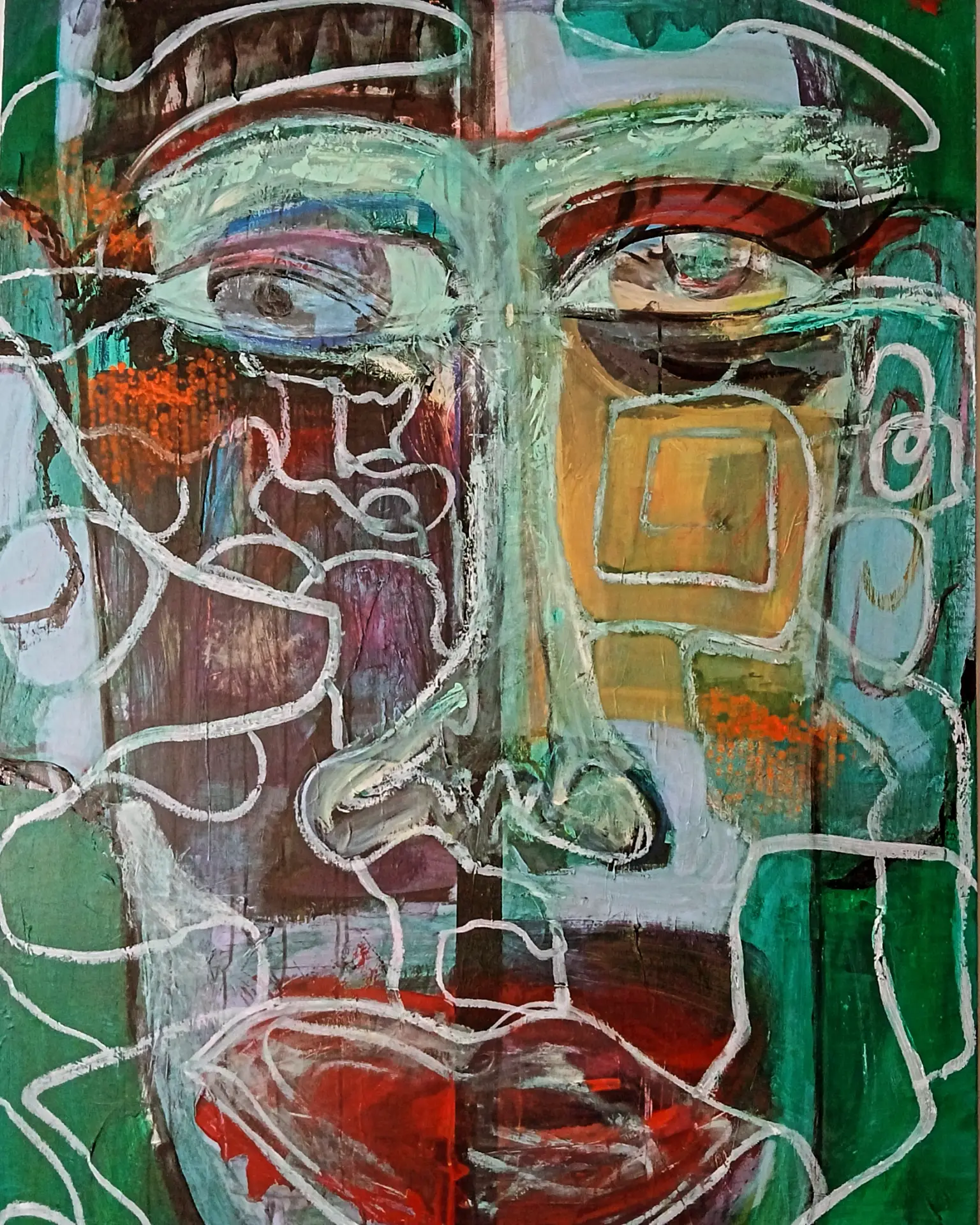
BROKEN FRIDA
110/170 cm
Acrylic paints and
oil pastels on canvas
BROKEN FRIDA
Frida goes down the street to buy her daily bread. She greets the baker, a friend from across the road, and continues on her way. She thinks about getting meat for the weekend. She greets the butcher, takes her groceries, and with half a smile heads home. Everyone in the neighborhood knows Frida. She is seen as a kind woman — a mother of three, a wife, a homemaker, and a cat owner.
What they do not know — or perhaps they do, but choose silence — is that behind her closed door, Frida lives through abuse. She, her children, and even the abuser himself. A sick cycle of violence hidden in plain sight.
A door that absorbs cries of rage, fear, and despair. A key that turns quietly in the night — not for a sweet goodnight. A door that opens again in the morning, and life goes on. For Frida, for the children, for the abuser — their wounds bleeding invisibly into the pavement of the street.
Until the next weekend. When Frida once more walks to buy bread, greets her neighbors, and returns home… to close the door again.